Calligraphy: when letters become images
More than legibility: calligraphy seeks perfect balance and makes emotions visible.
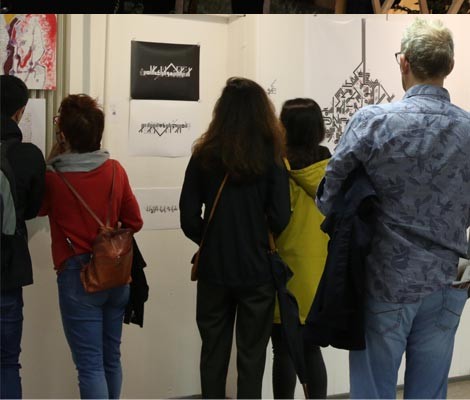
Calligraphy is held in esteem wherever copying sacred texts is itself described as a sacred act — traditionally in Christianity when copying the Bible, and in Islam. Today calligraphy is still important and inspiring for Chinese and Japanese writing culture too.
More important than legibility is achieving perfect aesthetic balance and making emotions visible. In medieval Western culture, calligraphy played a role that can hardly be overestimated as the only known form of transmitting literature.
Between legibility and beauty
To keep texts clearly readable, script was altered calligraphically only to a certain degree — in the form of abbreviations and ligatures. In Europe, book decoration always extended to images and illustrations, since Christianity has no ban on images, unlike Islam and Judaism.
In Germany, Augsburg and Nuremberg in particular were centres of book and writing art. In the Renaissance and Baroque, European calligraphy emerged as an art form consciously aimed at the beauty of writing.
Arabic script
In Arabic calligraphy, writing meets rhythm: a letter changes its form depending on its position in the word, and the line follows a breath. In our workshops participants get to know reed, ink and the basic forms — and quickly notice that calligraphy is above all patience.