Arabic music: maqam, rhythm and voice
What makes Arabic music — quarter tones, maqam systems and the central role of the voice.
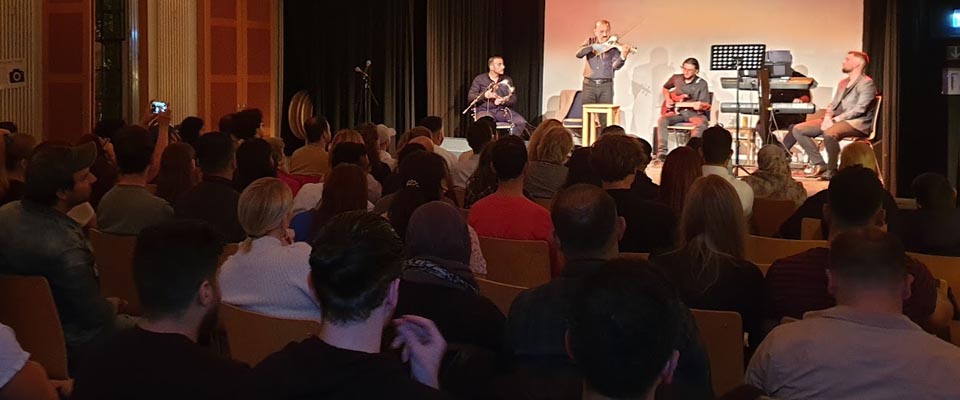
Arabic music achieves its expressive power mainly through lyrics and typical instruments, as well as through its remarkable melodic and rhythmic means. Most Arabic music is linearly monophonic, though today there are also pieces that make extensive use of polyphonic harmony.
What shapes Arabic music
- an Arabic tonal system (maqam) with its own interval structures, such as quarter-tone steps
- rhythmic-temporal structures that form shaping patterns (īqāʿ)
- heterophony as the prevailing way of playing
- instruments that clearly shape the tonal system
- forms tied to festive occasions
- the great importance of the singer, which gives compositions room for interpretation and improvisation
Instruments
A distinction is made between regionally widespread folk instruments and classical Arabic instruments. In medieval classifications the Arabic lute (oud) holds a preferred position, followed by other string and wind instruments. At the bottom are drums, mostly associated with folk dances.
The spike fiddle rabāb belongs to folk instruments: a small body, often half a coconut shell, only one string. The long-necked lute buzuq developed in the 20th century from a simple accompanying instrument into a melody instrument of classical Arabic music.