Dabke needs no invitation
When people hold hands and sway to the music, a celebration begins — and everyone is allowed to join.
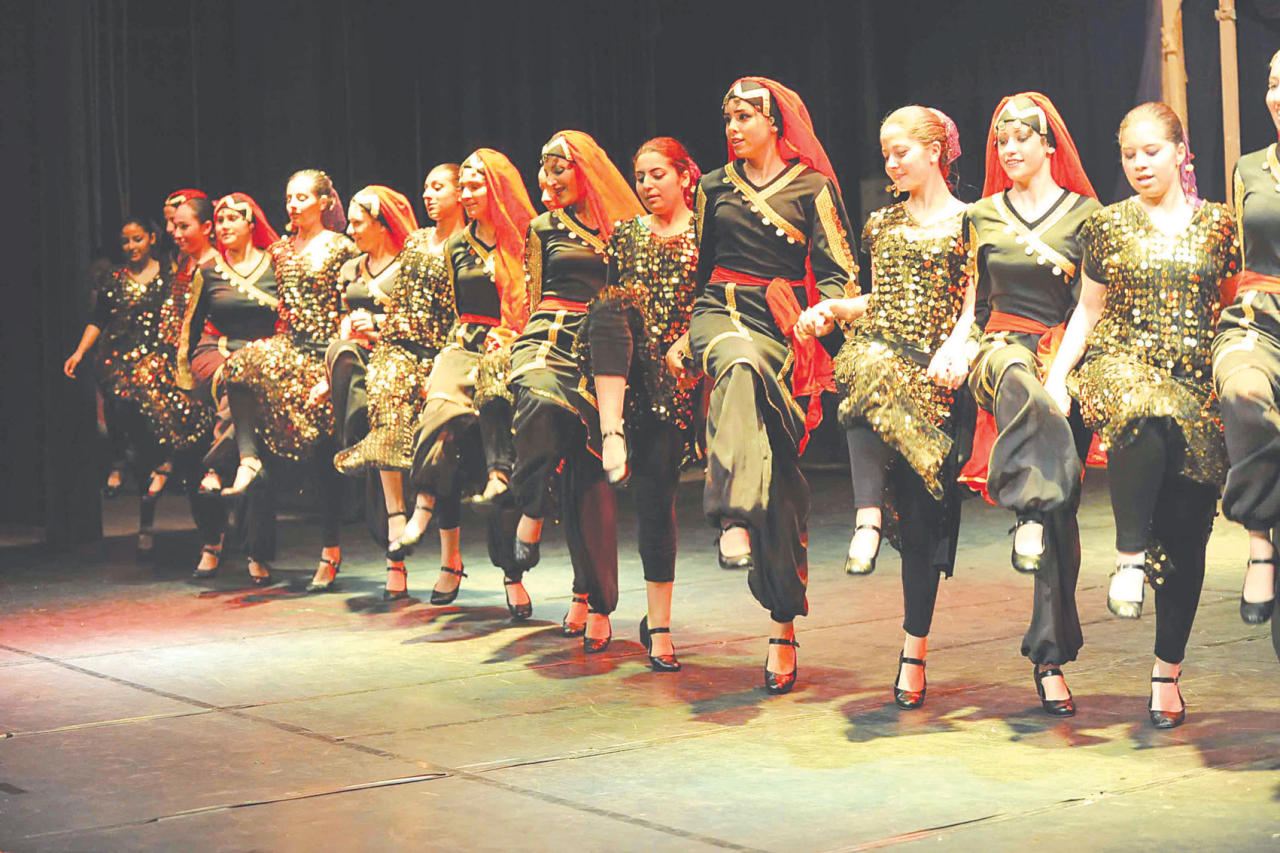
When you see people holding hands and swaying to the sound of music, you know that a wedding or a festival is beginning — and you can join the celebration without knowing the bride or the groom. Dabke in the Levant needs no invitation.
Across the Arab world there are folk dances that try to explain the secret of this collective dance. It is said that dabke came about at the wish of one person, and that people came together to clear the way for them with dabke circles and to connect with one another.
Hands and feet
Dabke is usually performed at weddings in the Levant. A dabke group consists of at least ten people, a musician and the end-blown flute shabbaba. Hands play an important role during the performance: they are a sign of unity and solidarity. Feet on the ground are a sign of strength and energy — accompanied by songs that express the depth of belonging to the land and to home.
Arab communities care deeply about passing their folklore and heritage from generation to generation in order to preserve their identity. Popular dabke is one of the most important images of that heritage.
From spring to the coast
Spring celebrations in Syria are accompanied by an expressive dance that imitates the joy of green plants. On the Syrian coast there is a fast dabke variant called “jabli”, danced by many people at once.
Perhaps the loss of the word’s original meaning strengthens the hypothesis that its origins lie in ancient civilisations. The word derives from Syriac: “dabek” names the “first” one, who starts the dance. Everyone else pays attention, the first sets the direction, and the others follow.
Ahmad AL Zaher — founder and editor-in-chief of Arap Culture, artistic director of the Arab Culture Festival.